Multimodal Artificial Intelligence-based Long-term Mortality Prediction after Transcatheter Aortic Valve Implantation

This study develops a multimodal artificial intelligence model that predicts how long patients live after a transcatheter aortic valve implantation, learning from clinical, imaging, laboratory, and procedural data from 3991 patients treated in Switzerland and Japan, and shows that it stratifies long-term risk more accurately than the surgical risk scores currently used to counsel patients before the procedure.
Machine Learning–Driven Risk Prediction Model in Transthyretin Amyloid Cardiomyopathy

This study builds a machine learning model that estimates the risk of death or heart failure hospitalization in people with transthyretin amyloid cardiomyopathy, trained on 850 patients from amyloidosis referral centers in Switzerland and Austria, and shows it separates higher from lower risk patients more reliably than the staging systems clinics currently use.
Delays between CE mark and FDA regulatory approval of AI-enabled software for radiology

This study examines how long an artificial intelligence tool for radiology takes to gain approval on both sides of the Atlantic, tracking 239 devices through European CE marking and United States FDA clearance, and finds that products authorized in Europe first typically wait roughly five times longer for their second authorization than those that started in the United States.
A Unified Framework for Comprehensive Cardiac CT Segmentation and Phenotyping
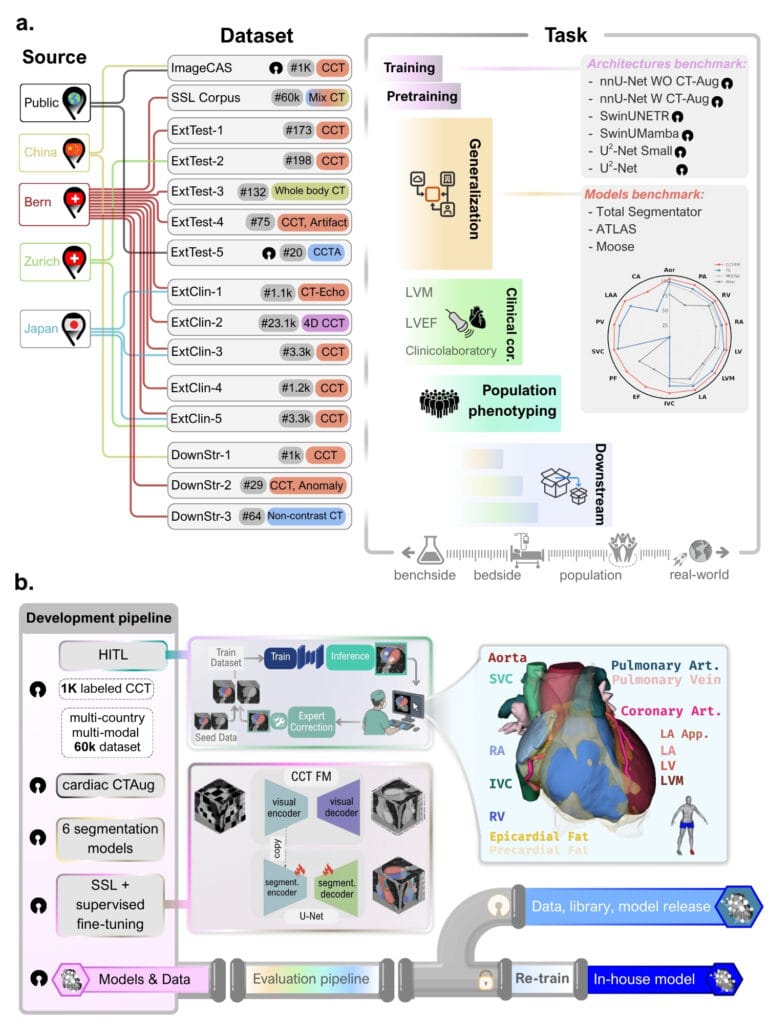
This study introduce a new open-source AI tool that can automatically measure 14 distinct heart structures from CT scans with greater accuracy than existing tools. This development makes it practical to assess heart health on a larger scale using scans that people already receive.
Reconstruction-Informed and Multidomain Deep Learning for Generalizable CT-Free Attenuation Correction in SPECT Myocardial Perfusion Imaging
This study presents a deep learning approach that feeds several differently reconstructed non-corrected SPECT images into a single model and trains it against both the attenuation map and the corrected image at once, producing attenuation-corrected myocardial perfusion scans that hold up on data from an outside centre and that experienced readers could not reliably tell apart from the CT-corrected versions they were meant to replace.
Grounding Clinical AI Competency in the Architecture of Clinical Care
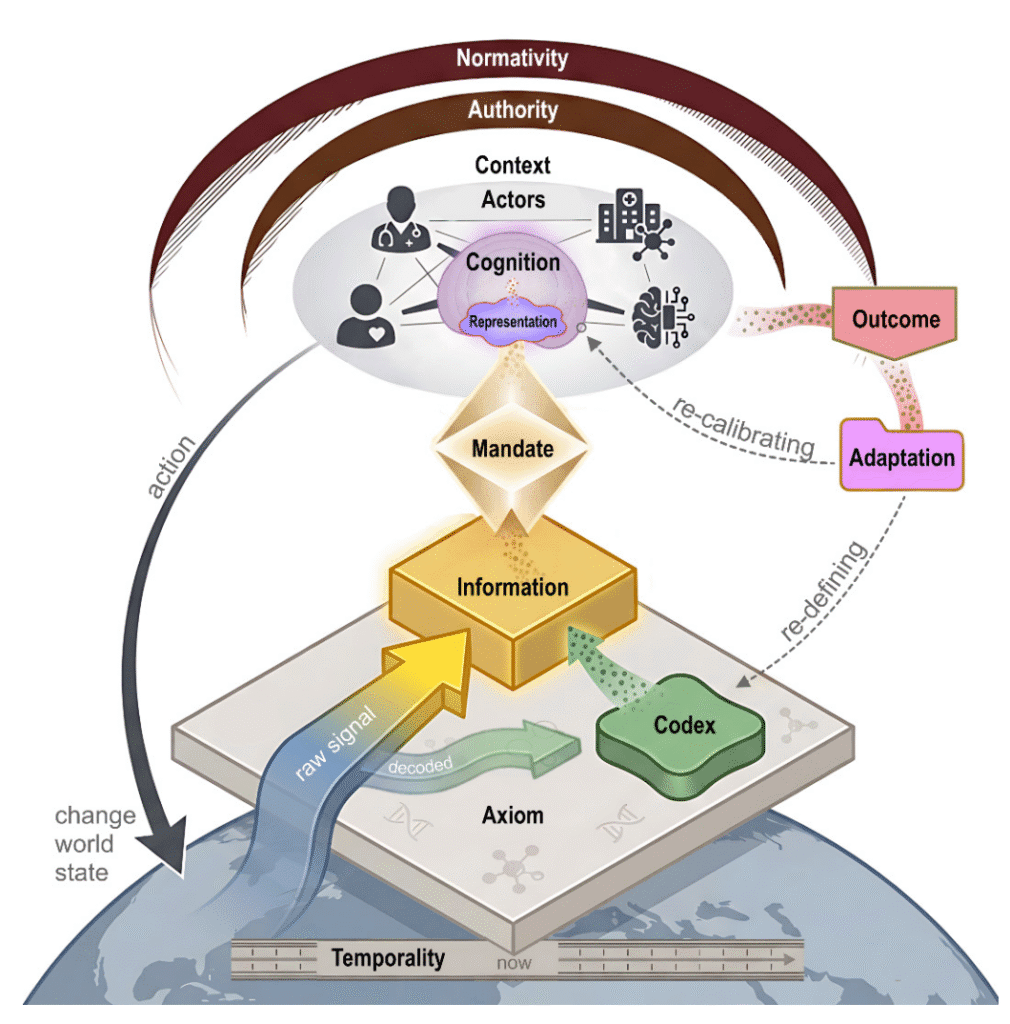
This work introduces the Clinical World Model and Clinical AI Skill-Mix, a shared framework that organises medical AI competency across billions of clinical contexts and reframes the field’s central question from whether clinical AI works to the coordinates in which it has demonstrated reliability, and for whom.
Automated Intravascular Ultrasound Image Processing and Quantification of Coronary Artery anomalies: The AIVUS-CAA Software

This study introduces an executable, low-code software that automatically segments lumen contours and identifies cardiac phases in intravascular ultrasound images from patients with intramural coronary artery anomalies, turning what is normally a slow, rare, and reader-dependent analysis into a fast and reproducible workflow that holds up under both rest and stress conditions.
Artificial Intelligence in Valvular Heart Disease: Innovations and Future Directions

This review examines how artificial intelligence can transform valvular heart disease management by integrating multimodal data for enhanced diagnosis, procedural optimization, and personalized treatment strategies, while addressing critical challenges including validation requirements, algorithmic bias, and transparency concerns that must be resolved for successful clinical implementation.
Multimodal Machine Learning-Based Technical Failure Prediction in Patients Undergoing Transcatheter Aortic Valve Replacement

This study builds and validates machine learning models that draw on 184 clinical, imaging, and procedural variables from nearly 3,000 consecutive TAVR patients to anticipate VARC-3 technical failure before it happens, showing that cardiac and vascular complications can be predicted with moderate-to-high accuracy.
Myocardial Perfusion SPECT Radiomic Features Reproducibility

This study demonstrated that radiomic features extracted from cardiac SPECT images are highly sensitive to reconstruction parameters, emphasizing the need for standardized imaging protocols to ensure reliable clinical applications in coronary artery disease assessment.